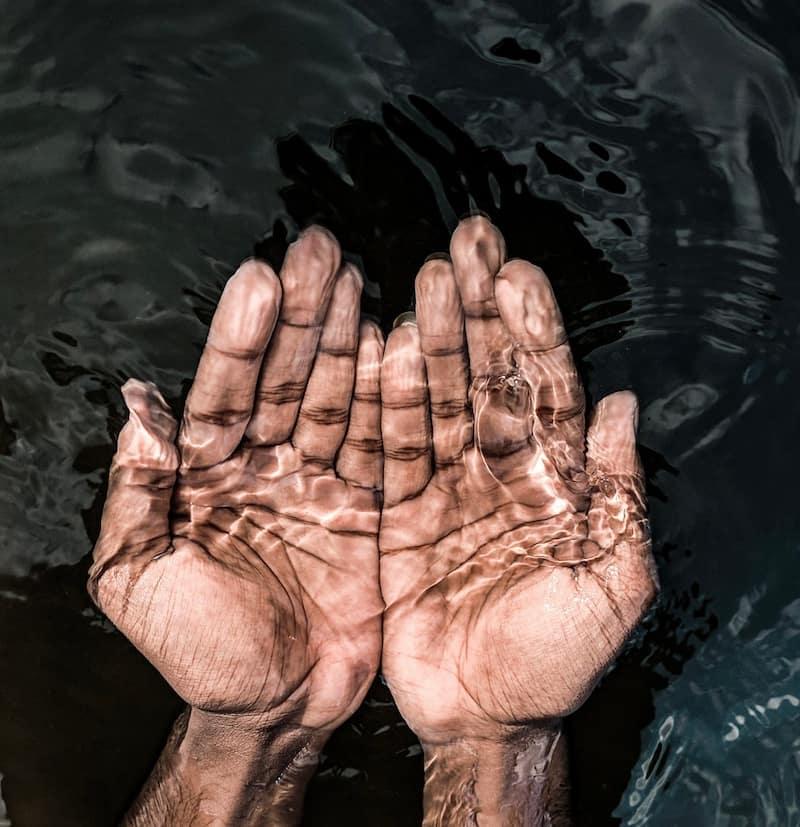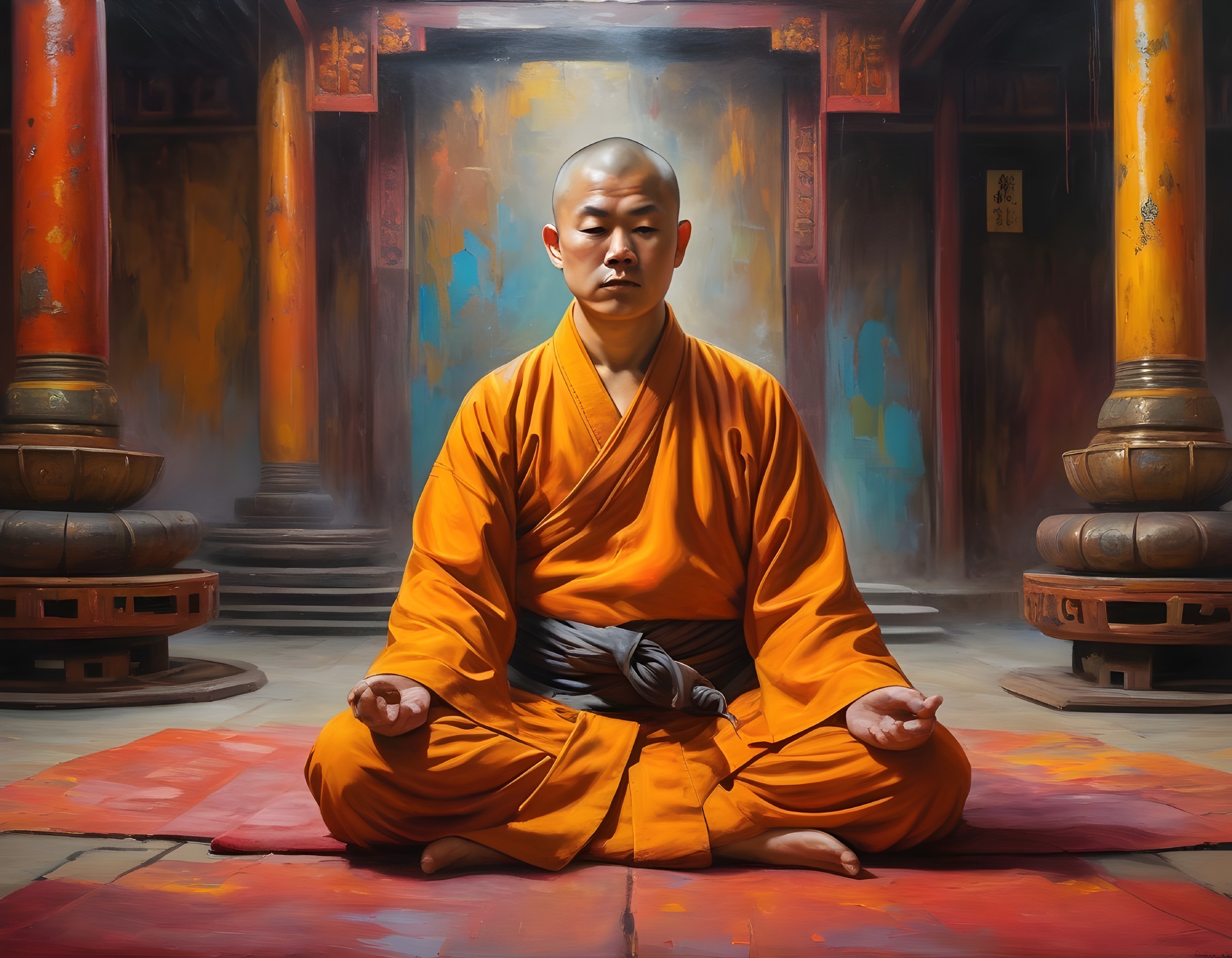
Many of us are exhausted, not because we lack discipline. There are many young men and women doing their absolute best to make it somehow, someway. Rather, it’s because we live in a state of constant forcing—forcing outcomes for everything: how we train, how we study, how our body looks, the marks we get at university, or who we want to like us, platonically and romantically. To be direct, we are overthinking every detail of our lives!
In the ancient Chinese philosophy of Daoism, Wu Wei is the art of acting within the present, without a concern for what happened, or what will happen—no tension, no self-monitoring, and no grip.
Gen Z’s Hidden Religion: Performance

As a 23-year-old man, even though I think I’m different, I can absolutely relate to the struggle of performance anxiety and putting out your best image—the struggle that seems to plague our entire generation. Almost every single one of us is trying to be ultra-productive in whatever way we lean. It could be intellectual, physical, emotional, spiritual, or all four… even more!
We’ve come to attach our self-worth to what we put out into the world, constantly worried about where we will be in the future, or what we did in the past. I’ve experienced a lot of these myself, and I’m sure many—if not all of you—can relate to this:
- Wanting to perform so well academically that you lose time for everything else. Living in a constant state of analysis and time management that you can never turn off. Constantly trying to intellectualize your emotions, social interactions, lifestyle, and even your own mind, to gain a sense of control you feel you can’t have without it.
- Training to hit a new PB at the gym, or to cut down enough body fat to look as lean as you can. Judging yourself harshly when you compare your own journey to what the more shredded guy/girl is doing. Making yourself feel inferior despite the immense effort you’ve put in and the results you’ve accomplished.
- Judging yourself for actions you took, or behaviours you engaged in, based on moral metrics imposed on you by your religious community, parents, school, peers, and popular media—seeing contradictions everywhere, and burning out because you can’t decide what to believe in, and what not to.
For a lot of young men, they are pressured—often silently—by inputs all around them that their worth is based only on external metrics: how socially confident you are with the popular kids, how many women you can impress (or even sleep with), how nonchalant you can appear when things get tough, opting to ghost someone or minimize their pain so you don’t have to confront yours.
And a lot of young women face their own issues! The status game can look similar on the surface, but with a twist. Many are tired of being strung along by guys (and yes—the same happens the other way too; there’s no single “good guy” or “bad guy” here).
Many are approached so often for validation that they begin to believe the only thing guys want is validation, sex, or approval. Many young women then live in tension—cynical about men and the social game, while also craving belonging—and will try to be more desirable and feel socially safe, even if the way it’s advertised isn’t what they truly want.
As a result, this creates a toxic push-pull between men and women within their social circles or intimate relationships, with everything tied to the same mechanism:
self-monitoring → tension → exhaustion → repeat.
This isn’t a motivation problem. It’s a FORCING problem.
What Wu Wei Actually Means
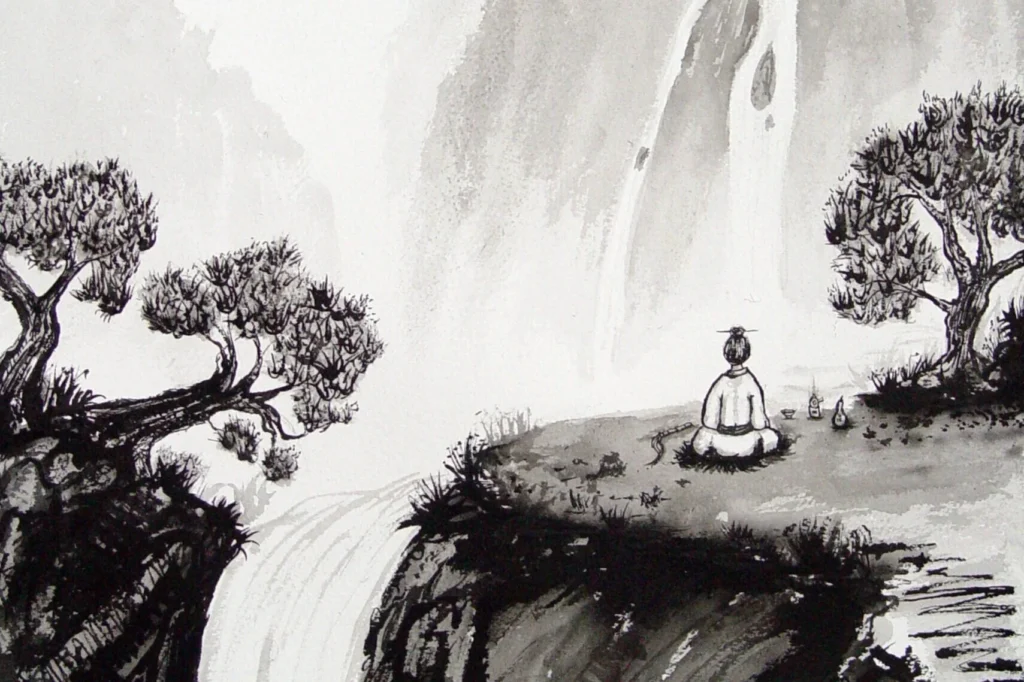
Wu Wei can be translated to “effortless action,” where one is so engrossed in what they’re doing—whatever it may be—that any intentional effort that could cause friction disappears. Often, people think it means you do nothing. It’s funny you’d think that, because on the surface, it does look that way.
The image we have of ancient Chinese monks is them in long, flowing robes—sitting in the sun, or along a slowly flowing stream or river, simply enjoying life as it is. Yet consider that some of the most prolific and lethal martial art forms come from this very same region, as well as intense intellectual developments across various domains. So there may be merit to not forcing anything 😉
Think of it like this: wu wei is about acting without forcing an outcome. You become so focused on the task at hand that the outcome becomes irrelevant to the task itself. However, effortless doesn’t mean easy. It simply means unclenched.
There is a huge difference between the effort you put in and the outcome you are forcing yourself to expect from it. The effort itself is key here—essentially, it’s all that matters. By directing your energy onto a project, a ritual, a commitment to someone else, your values, training, or even socializing… that’s it. That’s all you need to do.
The problem comes in when you expect a particular outcome from these actions. By forcing it, you limit what you can get from the task. You create tension, place your value on the outcome, and monitor yourself the entire time to see if you’re doing it “right.”
Think of the times you spoke to a girl/guy you found attractive, and you found yourself stressing about whether what you were saying was right, whether you looked nervous, or whether you were being too much, rather than simply being there and enjoying the interaction for what it was. Or when studying for an exam, you’re so stressed about remembering the right information that your mind can’t actually process it deeply enough to truly understand it.
This isn’t a state you’re fully conscious of when you’re in it. Once you understand the definition, you will feel it in your body rather than notice it in your mind.
What Wu Wei Feels Like

Think of the times you were learning about something that fascinated you, or reading a book you were so in love with, or practicing something like art, a new exercise, or going on a long walk—where you were just present in the moment. Your jaw was relaxed. You were aware of everything, but unfazed by its effects.
A story from my own life that you can probably relate to comes from the gym.
I found myself feeling so pressured to lift a heavy weight and feel good about it. By focusing on how I performed and how I looked while doing it, I created so much internal pressure that it ruined the exercise for me completely. But then a wave of calm washed over me when I didn’t care about how I looked or how it felt. I was so focused on how my body felt in the moment—on every muscle contraction and my breath—that the movement became fluid. Oddly enough, I became stronger, and that was because I let go of the outcome and focused purely on what was happening in my body in the moment.
This goes for everything in your life—from skill development, to socializing, to even resting. When you stop forcing an outcome for whatever you’re doing, you don’t become more passive—you become more capable. And the reason it works isn’t mystical. It’s mechanical.
Why Forcing Backfires
When you are constantly self-monitoring every action you take, you don’t only become more aware of your mistakes—you create more mistakes where there didn’t need to be any. Your attention is turned so heavily onto “me, me, me” that your mind and body are pulled away from what you’re doing, and instead onto how you should be doing it. This makes you lose timing and responsiveness in the most crucial places.
You enter a stressful state of tunnel vision, constantly analysing threats or what you’re doing wrong—thinking it should be done this way or that way rather than simply doing it.
In a social situation, you can’t read the room or what the other person is trying to tell you because you’re so concerned with how you’re coming off—whether you’re coming across nonchalant and confident—rather than just listening to them and trying to understand what they are telling you.
In your workspaces—whether studies or profession—you can’t hit a creative spark or soak in what you need to, because all that matters in your mind is the deadline someone else set for you, rather than what you can do with the work in front of you right now. In short, you are performing the task in a way that others expect you to, or how you expect yourself to, to gain approval.
Holding onto the outcome is what makes true mastery and present enjoyment run away from you. The more you chase being calm, confident, or skilled, the more you signal a threat to your own system—and the more it begins to shut down and function poorly.
To summarize the entire philosophy: the only way to become the most of what you can be is to let go of any outcome you, or others, have set for you. Allow yourself to make mistakes—and be happy with making those mistakes—because when you do this, you WILL find your own way.
Modern Psychology Keeps Rediscovering Wu Wei

Modern psychology and neuroscience have been diving into the mindsets of ancient philosophies and methods for decades—ranging from Stoicism, Buddhism, hunter-gatherer worldviews, and even Daoism.
There’s actually a scientific term that overlaps strongly with wu wei, and this might set off some lightbulbs in your head. It’s called a flow state.
When your current skill level meets a challenge and your self-consciousness and pressure to perform drop, you don’t become sloppy. In fact, your best performance arises when your inner critic shuts up and lets you focus on—and enjoy—the task at hand.
We see this across countless specialists: top athletes in their element on the field, intellectuals and researchers having breakthrough-level insights because they let their minds run wild, even surgeons when they are so focused on the operation—on what’s directly in front of them and in their control—that the pressure of the outcome disappears.
Basically, trying to control everything that’s happening while you’re doing something kills the skill you are actively developing. Trying harder to get the outcome you want often makes you worse than you could be if you didn’t care at all.
And if we look at the science of the human nervous system, it reinforces everything the ancient Daoists meant when they spoke about—and practiced—wu wei.
When you are focused on the outcome of whatever it is you’re doing, your body activates the sympathetic nervous system—your “fight or flight” response. In that state, your body is looking for a way to escape stress and minimize its effects.
The key issue is that when you’re in that state, you’re not going to learn much at all, because your mind and body are focused on escaping the situation rather than sitting in the present and learning.
But if you let go of the outcomes, the deadlines, and the expectations of yourself and others—oddly enough—everything begins to fall into place. Your mind and body are in the present, not trying to get out of it. And that parasympathetic state— “rest and digest”—is where your best performance often happens.
And the funny thing is… you’re not truly aware of it 😉
So, how do we actually practice this without it becoming passive or overly controlling?
Three Practices to Start Wu Wei Today
1) Name the Grip
Before you try to fix anything, catch the clenching. Ask yourself, plainly: What outcome am I trying to force right now?
Sometimes it’s obvious (“I need her to like me”), and sometimes it’s subtle (“I need to feel confident before I start”). The moment you name it, you separate from it. You stop being possessed by the outcome.
Try this:
“What am I trying to force—and what would it look like to do the action without demanding the result?”
2) Soften the Body
Wu wei isn’t just a mindset; it’s a physical state. Your body will tell you when you’re forcing: tight jaw, raised shoulders, shallow breathing, tunnel vision.
Soften first. Not to “relax” as a performance, but to return to capacity.
Try this (10 seconds):
Unclench your jaw → drop your shoulders → slow exhale → widen your gaze.
3) Choose the Next Right Move
Wu wei doesn’t mean drifting. It means acting cleanly from what’s in front of you.
Instead of negotiating with your mood, ask: What’s the next right move, aligned with my values, that I can do now—without demanding a specific outcome?
That could be one page of studying, one set in the gym, one honest message, one walk, one shower—anything. Small, clean, present.
Closing: Calm Isn’t Weakness (It’s Capacity)
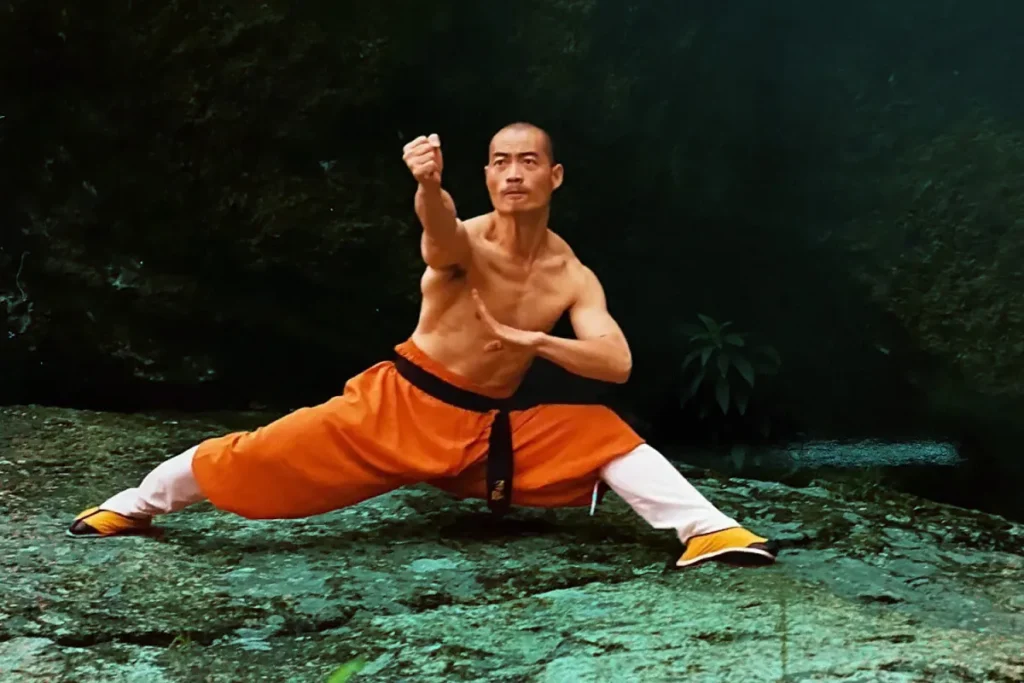
Here’s the blunt truth: most of us aren’t tired because we’re weak. We’re tired because we’re constantly trying to control things that were never fully controllable
Our image, our outcomes, our social standing, our confidence, our “aesthetic,” our productivity, our healing timeline, and whether strangers on the internet would approve of the way we breathe. In controlling and overthinking every detail of our lives, we are limiting our individual potential.
We’ve turned life into a performance review, and then we wonder why we’re anxious.
Wu wei isn’t some mystical “become one with the universe” cosplay. It’s way more practical than that. It’s the skill of doing what you’re doing without clenching your soul around it. It’s effort without desperation. Action without that inner voice screaming, “Is this working? Is this making me attractive? Is this improving my life? Is this what a high-value person would do?”
Because here’s the thing: the moment you stop forcing the outcome, you don’t become lazy—you become dangerously effective. You get smoother. You get clearer. You get more present. You stop leaking energy through your ego every five seconds.
So try it this week: do the work, lift the weight, send the message, take the rest day—whatever it is—but don’t sit there gripping the result like a stock trader watching Bitcoin at 2 a.m. 😅
Do the thing. Drop the chokehold. Let the system breathe. 😉
FAQ
1) Is Wu Wei just “not caring”?
No. Wu wei isn’t apathy, and it’s not emotional numbness. It’s care without clenching—showing up fully, trying earnestly, without turning the outcome into your identity.
A good test is this:
- Not caring says: “Whatever, I don’t even try.”
- Wu wei says: “I’ll do my best—then I’ll let reality respond however it responds.”
It’s the difference between being detached because you’re avoiding, and being detached because you’re grounded.
2) If I stop forcing outcomes and overthinking, won’t I become lazy?
Only if you confuse wu wei with avoidance.
Wu wei still includes effort. You still train, study, build, communicate, and take responsibility. The difference is that you stop doing it with a mental gun to your own head. You stop acting like:
“If this doesn’t work, I’m doomed.”
Wu wei is not “I don’t care if I improve.”
It’s “I’ll improve best when I stop choking myself with pressure.”
If anything, wu wei often makes people more consistent, because they stop burning out from their own intensity.
3) How do I know if I’m forcing or simply working hard?
Ask your body—your body always snitches.
Hard work usually feels:
- directed
- focused
- purposeful
- challenging, but clean
Forcing usually feels:
- tight jaw
- shallow breathing
- tunnel vision
- self-monitoring (“Am I doing this right?” every 10 seconds)
- emotional desperation around the result
- overthinking
A simple line to include:
Effort is commitment. Forcing is control.
Effort expands your capacity over time. Forcing compresses it.
4) Can Wu Wei help with anxiety and social pressure?
Yes—because anxiety feeds on the exact habits wu wei dissolves: self-monitoring, outcome-grip, and threat-mode living.
In social situations, anxiety often isn’t “fear of people.” It’s fear of:
- being judged
- being awkward
- being rejected
- being misunderstood
So you start performing. You start calculating. And that self-monitoring makes you stiffer and less natural—then you judge yourself for being stiff—then you try harder. Loop.
Wu wei breaks the loop by shifting your focus from:
“How am I coming across?”
to
“What’s actually happening here—and how can I respond cleanly?”
It doesn’t remove nerves instantly. It just stops you from making nerves your boss.